Greenland has become the topic of ample global controversy stemming from the United States’ national security objective to obtain the country for itself.
🕒 Read Time: 10 Minutes
February 6, 2025 | Analysis | Global Governance and Diplomacy
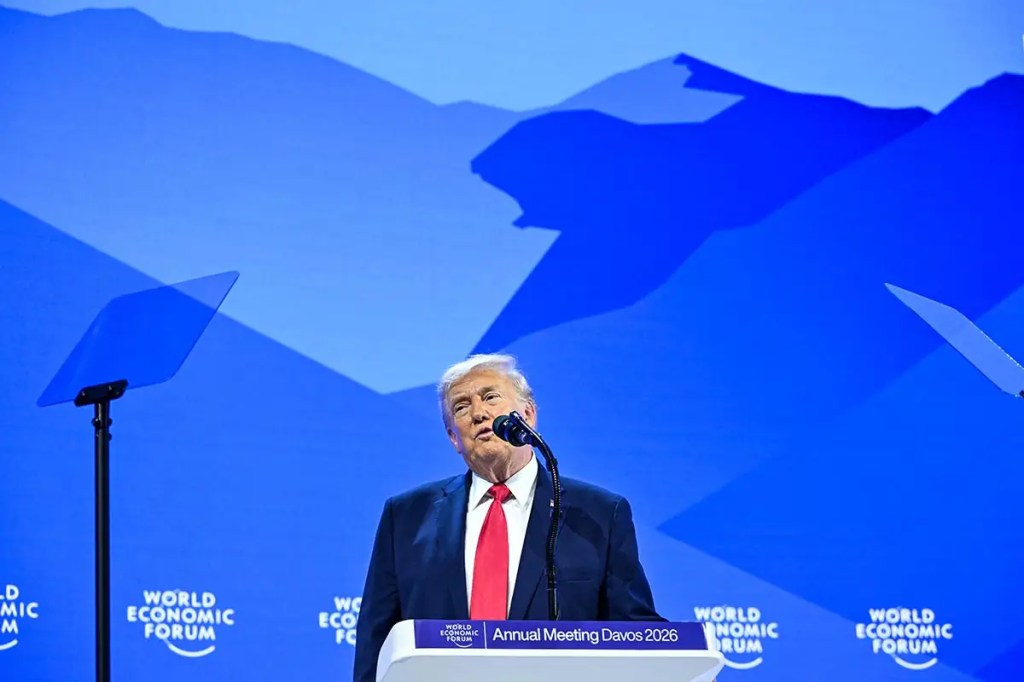
United States President Donald Trump has made it very clear that his intention is to pursue Greenland as a U.S. territory, which has been a self-governing territory of Denmark since 1953.
However, this desire has not come without pushback from international and domestic allies.
Greenland as a Danish Territory
Greenland is the world’s largest island, with a population exceeding 56,000 people. Approximately 80% of the country is covered in snow, with the majority of its residents living on just 20% of the land.
Until 1953, Greenland was a Danish colony, after which the Constitution of Denmark provided the complete integration of Greenland into Denmark, thus allowing the country two Danish seats in the Danish Parliament, the Folketing. In 1979, after domestic calls for home rule, Greenland developed the Home Rule Agreement, allowing the country its own parliament and government, Inatsisartut and Naalakkersuisut, while maintaining its seats in the Danish Parliament.
In 2009, the Act on Greenland Self-Government was agreed upon, nullifying the previous Home Rule Agreement of 1979. Under this act, Greenland continued to have two representatives in the Danish Parliament, but the government assumed control of economic matters and was recognized as a sovereign, self-determining state under international law.
Greenland remains a Danish territory, but it possesses the ability to represent itself as its own entity and conduct domestic and administrative affairs and operations, except for the ability to conduct foreign affairs.
The U.S. in Greenland
During World War II, after Germany occupied Denmark in 1941, the U.S. signed an agreement with Denmark to protect the Danish colony of Greenland and allow for the deployment of U.S. forces. After the German threat dissipated with its defeat in 1945, the Soviet Union appeared as a threat to Greenland.
In 1949, NATO was established as a containment strategy aimed at preventing the spread of Soviet-supported communist revolutions in Eastern Europe. After the USSR’s first successful nuclear bomb detonation in the same year, the significance of NATO skyrocketed in the region. Thereafter came the signing of the 1951 Defense of Greenland agreement between the U.S. and Denmark, providing the U.S. with the ability to expand its deployment and presence in Greenland, as well as to construct military bases in the country.
With this newly developed ability, the U.S. was allowed to construct the Pituffik Space Base in the Thule region of Greenland. The base gave the U.S. an essential defensive outpost in Greenland in the event of Soviet action and remains in full effect to the present day.
Trump’s Arctic Aspirations
Strategic location and economic opportunity largely encompass Donald Trump’s aspirations in Greenland and the Arctic.
Both Russia and China have sought to expand their influence in the Arctic, with both military presence and the establishment of infrastructure. Due to the war in Ukraine launched in 2022, Russia’s desire to deter NATO influence, and Chinese aspirations to transform the Arctic into the “Polar Silk Road,” both the U.S. and European leaders have been on high alert. “Right now, Greenland is covered with Russian and Chinese ships all over the place. We need Greenland from the standpoint of national security,” says Trump.
In addition to allowing for amplified defensive capabilities, rising temperatures in the Arctic and melting ice provide a northwest passage for easier trade and the passage of military ships, a development that the U.S. is seeking to use in order to counter Russian competition in the region.
Greenland is also rich in minerals such as rare earth elements (REEs), minerals utilized for green energy technologies, and fossil fuels. This is part of a push by the U.S. to reduce the nation’s dependence on China for minerals and rare-earth elements as a means to bolster national security. Additionally, it will allow for lower production costs and the strengthening of domestic manufacturing.
Domestic and Global Unrest
Following Trump’s statements regarding his Arctic ambitions, both domestic and global parties have come to the defense of Greenland in efforts to oppose these ambitions.
In January, after Trump officials solidified the president’s eagerness to secure the island by using military force through statements, Senate Republicans, including Senators Thom Tillis (North Carolina) and Lisa Murkowski (Alaska), strongly expressed their disdain for this decision. “You see, more than in other incidents, pushback by Republican senators on this topic. I have no understanding how this is an idea to begin with,” says Tillis, referring to the strain that this action would have on NATO and U.S. alliances.
Additionally, global actors generally aligned with Trump have criticized his decision. Far-right leaders in Europe have spoken out against Trump, specifically in Germany, France, Italy, and the United Kingdom. Nigel Farage, leader of the Reform UK party in the United Kingdom and a long-time ally of Trump, stated that Trump’s movement in the region would be a “very hostile action,” and other lawmakers called this an act of coercion in the European Parliament.
The lack of other notable countries, such as Turkey, Poland, and the Czech Republic, speaking out against this decision in Europe can be connected to fears of a potential conflict with the U.S. and the destabilizing effects that would follow.
Above all, both domestic and global actors are concerned about the way in which this action could affect U.S. alliances with other nations, NATO, and the stability of the world and regional order in the Arctic and Europe.
Arctic Retreat and Its Implications
On January 21, Trump decided to back away from his decision to take Greenland by force at the World Economic Forum in Davos, Switzerland, amid grand controversy and a potential war with a NATO ally.
However, Trump remains determined to attain Greenland for the U.S. and is eager to negotiate terms regarding what he calls the country, “a piece of ice.” Global and domestic actors have seen this sort of insatiability as signaling the development of a new world order with echoes of authoritarian states.
Anders Fogh Rasmussen, the former Prime Minister of Denmark and Secretary General of NATO, stated, “Mr. Trump, like Vladimir Putin and Xi Jinping, believes in power and power only,” later asserting that “Europe must be prepared to play by those same rules.”
The movement away from the U.S.’s longstanding anti-imperialist approach combating dictators such as Adolf Hitler in Germany and Saddam Hussein in Iraq toward a more Vladimir Putin-esque manner is seen, by former State Department official Jeremy Shapiro, who served under the Obama administration, as “worse than a crime.”
This newly developing world order is forming fast, as the U.S. under Donald Trump is increasingly showing signs of mirroring the illiberal means utilized by its adversaries.
 The Diplomatic Drift
Leave a comment