🕒 Read Time: 15 Minutes
June 4, 2025 | Historical Review | Power and Security
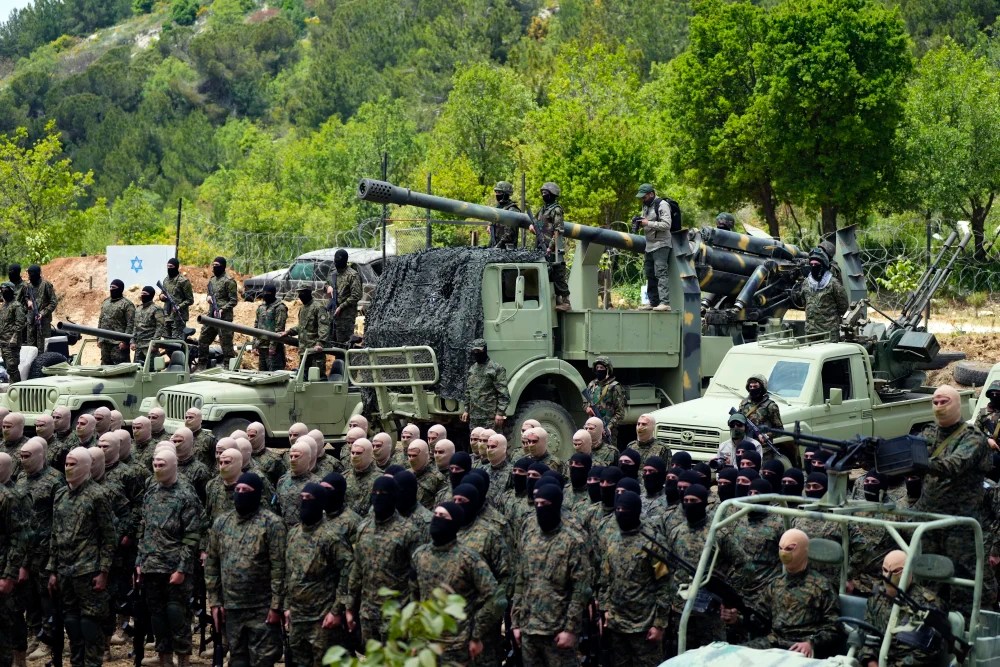
In the present day, many terrorist groups make the front lines of the newspaper due to their contributions to regional and international insecurity. However, not all of them are involved in the global narcotics industry. A group that falls into both categories is Hezbollah, a Lebanese Shiite Muslim political party and militant group, being one of the most renowned narcoterrorism groups in the Middle East region.
Hezbollah was founded in 1982 as a result of an Israeli invasion of Lebanon, with the Israel Defense Forces (IDF) quickly occupying Lebanon and disempowering the Muslim majority of the state. The group is externally backed by Iran due to Iran’s wider goal with Hezbollah carrying out both the Iranian mission of asserting control over the region and combating Israeli imperialism via violent military offensives.
This piece will specifically investigate Hezbollah’s role as a narcoterrorism group in the Middle East that generates profit to finance its violent actions against Israel, through the combination of carefully constructed drug trafficking operations and regularly utilized terrorist tactics to protect said operations.
Hezbollah’s History: Conflict, Politics, and Drugs
Origins of Hezbollah
As stated previously in the introductory section, Hezbollah was founded as a result of an Israeli invasion in Lebanon in 1982 during the Lebanese Civil War, formed by the Shiite Islamic population to repel Israeli and Western invaders.
The 1982 invasion was an effort by Israel to move against the occupying force of Palestine in southern Lebanon, the Palestine Liberation Organization (PLO). Israel moved past southern Lebanon and moved as far as West Beirut to properly assert enough control to implement its true goal: to insert a trustworthy Lebanese government.
However, this would not go uncontested, with the formulation of Hezbollah as the main group bent on repelling Israel from Lebanon, founded and built off of an Islamic mandate.
Timeline of Growth and Major Events
From 1983 to 1985, Hezbollah began to grow extensively, in size and in military capacity, ultimately forcing Israel to retreat to the Litani River in 1985 and then out of Lebanon completely in 2000. The group also grew politically, expanding into the political scene as a paramilitary political party, gaining eight seats in the Lebanese Parliament in 1992 and increasing until its present holding of 62 seats.
Over time, several wars and Israeli operations targeting Hezbollah have occurred between Israel and Hezbollah, such as Operation Accountability, Operation Grapes of Wrath, the July War in 2006, the Syrian Civil War in 2012, the 2024 Israeli Pager Attack in Lebanon, and the Israel-Gaza War in 2023, 2024, and 2025.
The Israel-Gaza War prompted Hezbollah to contribute to Hamas’ efforts, the Gaza-based Iranian proxy, through airstrikes and rocket campaigns against Israel. As a result of this support, Israel returned fire, eventually leading to the death of Hezbollah Leader Hassan Nasrallah in late 2024.
These Israeli campaigns mixed with Iranian influence have fueled Hezbollah’s hatred and rage towards Israel and its Western allies. With this, Hezbollah has initiated a unique terrorist campaign on Israel and the world, harming innocent civilians and combating the IDF through brutal means to fulfill the “Resistance role.”
Hezbollah has been responsible for several atrocities within this campaign, such as the 2012 Burgas Bus Bombing, killing five Israeli civilians and one Bulgarian, as well as other targeted operations in Israel harming innocent civilians.
Genesis of Narcoterrorism and Drug Trafficking
Hezbollah began its illicit trade of drugs to finance its operations against Israel, as well as its other means of terrorism and violent action in the Middle East region and beyond.
The group began experimenting with various self-sourced funding strategies in the 1990s, however, it began to expand its financing operations specifically into drug trafficking due to the fiscal backlash of the July War of 2006 against Israel and the dire need to source its own funding, separate from Iranian support.
In its expanding drug trafficking portfolio involving the illicit smuggling and trafficking of cocaine, heroin, and marijuana, Hezbollah opened itself up to several collaborations with drug cartels and global drug trafficking organizations (DTOs). In 2004, United States and Colombian authorities conducted a joint operation called “Operation Titan,” which intercepted a multi-ton cocaine delivery originating from Hezbollah, intended for the Colombian drug cartel La Oficina de Envigado. This implied that Hezbollah was working on establishing relationships with other narcoterrorism groups to secure a global chain of drug trafficking, allowing it to extend its influence into places it could maximize its profits.
In addition to its collaboration with drug cartels, Hezbollah has also extended its influence into Africa, Europe, and other parts of South America. This is made clear through an arrest made in 2004 of two brothers belonging to Hezbollah named Ali and Hassan Farhat, who were both arrested on drug trafficking charges because of the brothers’ connections with a Nigerian drug dealer.
Hezbollah would go on to continue its correspondence with other DTOs and criminal organizations, regionally and internationally, extending its influence to properly ensure efficient financing of its operations.
The Group’s Methodology and Strategy
Terrorism Tactics
By inciting violence and harming innocent civilians, Lebanon has successfully asserted a measurable amount of legitimacy as a global threat. It has used several terrorist tactics to deliver the wider political goal of Hezbollah and Iran, such as assassinations, kidnappings, extortion, and bombings.
Hezbollah has contributed to many terrorist attacks unrelated to drug trafficking, but more pertaining to its feud with Israel. As stated before, Hezbollah conducted the 2012 Burgas Bus Bombing in Burgas, Bulgaria at the Black Sea Resort, conducted by Hezbollah operatives Meliad Farah and Hassan El Hajj Hassan. This attack was carried out for the group’s mission to relentlessly attack any Israeli or Jewish target, ending in five Israelis and one Bulgarian dead, immediately resulting in the European Union placing Hezbollah on its terrorism blacklist.
Aside from traditional terrorist attacks, Hezbollah organizes its violence and criminal activity strategically to protect one of its most vital financial sources: drugs and arms trafficking.
In 2014, three Hezbollah operatives involved in the group’s drugs and arms trafficking operations, Ali Fayyad, Khaled Merebi, and Faouzi Jaber, were arrested in Prague, Czech Republic. They were arrested for their affiliation with the attempted dealing of missiles and cocaine to FARC, a guerilla, Maoist-Marxist group based in Colombia. As a result of these arrests, members of Hezbollah, alleged to be affiliated with Fayyad, kidnapped five Czech military officers and demanded the release of Fayyad and Merebi in exchange for returning the five officers.
Also occurring in 2014, Ali Koleilat, a Hezbollah operative accused of assisting Hezbollah in its illicit trafficking of drugs and weapons, was arrested after his arrival from West Africa in Brussels, Belgium. Being a key operative for Hezbollah’s trafficking operations, the United States intelligence closely observed his prosecution in Belgium, and in 2017, eventually uncovered malicious plots by Hezbollah to secure Koleilat’s release. The U.S. was granted the extradition of Koleilat to the U.S. from Brussels, due to Hezbollah’s plots to kidnap Belgian judges and assassinate the prosecutors involved in the case.
In the same year, in 2017, alleged Hezbollah financier and businessman Kissam Tajideen was arrested in Morocco in Casablanca Airport for fraud, money laundering, and “financing of terrorist activities.” Consequently, Iranian elements allegedly tried to extort the Moroccan government through bribery, but this failed due to Morocco agreeing to the extradition of Tajideen to the U.S.
Separate from its traditional violence directed towards Israel, Hezbollah has attempted on several occasions to utilize terrorist tactics to ensure the security of its drug trafficking operations, with the group cementing itself as an extremely volatile and dangerous narcoterrorism group.
Drug Production in Lebanon
The drug trafficking operations that allow for Hezbollah to be properly financed are through successful drug production, drug smuggling, and laundering of the profits.
Beqaa, a valley in Lebanon, is the region responsible for Hezbollah drug production. Since 1943, the main crops that have been produced in the Beqaa valley have been Hashish, otherwise known as cannabis or marijuana, opium, methamphetamine, and Captagon, with most of the production being controlled by Beqaa clans. This became a regional and international concern, prompting the Lebanese government to act against this production and burn the drug-producing fields, however, the Lebanese government only conducted these operations to appease international actors.
Peasants hailing from these Beqaa clans are responsible for the production of these drugs, but the question remains: How does Hezbollah profit from this?
Simple. The Beqaa clans are both responsible for the production and the sale of these drugs that they produce. Although this drug production has been held under strict surveillance by the Lebanese government, with Hezbollah’s political rise to power, it adopted the Beqaa clans as its constituents, allowing it to represent the Beqaa clans’ interests while pursuing its own.
Drug Smuggling and Money Laundering
Regional and international connections have allowed for Hezbollah to bolster its drug trafficking revenue through efficient smuggling operations and money laundering.
Hezbollah drug smuggling began in the 2000s, after the withdrawal of Israeli troops from southern Lebanon leaving an open-end in the village of Ghajar. The withdrawal resulted in the United Nations marking a line between Israel and Lebanon, with the absence of a fence in the north. Due to this, historically and in present-day, Ghajar is infamous as a key smuggling route for regional drug trafficking operations from Lebanon into Israel, utilized for Hezbollah and general Lebanese drug trafficking.
In addition to its regional smuggling operations, before the Syrian collapse in 2024, Hezbollah had a strong foothold in the Shia Crescent. This is the geographical crescent-shaped alignment of Shia-majority states such as Iraq, Syria, Lebanon, Bahrain, and Yemen, where Syrian intelligence has been known to coordinate with Hezbollah to uncover efficient drug smuggling routes.
In terms of international connections, Hezbollah has connections with groups in Colombia such as FARC and La Oficina de Envigado, as well as with Mexican Cartels such as Los Zetas. Through these connections, FARC and other DTOs can use pre-established drug smuggling routes through Latin America to transport drugs to Europe and the Middle East by various maritime means, or what Senior Researcher Michelle Jaramillo describes as “narco-submarines.”
This utilization of international and regional drug smuggling routes has allowed for a sustainable string of drug trafficking operations for Hezbollah. As Hezbollah’s connections continue to grow, so does the profit on all the smuggling parties’ sides to an immeasurable extent.
These successful smuggling operations give way to successful drug trafficking, regionally and internationally, and provide Hezbollah with an opportunity to cash out and launder the profits. It is extremely common for DTOs to use businesses and successful businessmen to orchestrate laundering of illicit profits.
As stated by the United States Department of the Treasury, referring to the illegal drug trafficking operations surrounding global terrorist Nazem Said Ahmad, “individuals involved in this network use(d) shell companies and fraudulent schemes,” and that “good market participants should be attentive to these potential tactics and schemes, which allow terrorist financiers, money launderers, and sanctions evaders to launder illicit proceeds through the purchase and consignment of luxury goods.”
Money laundering and drug smuggling go hand-in-hand. Without successful drug smuggling operations, drug trafficking cannot ensue, hence money cannot be laundered. All these skills, unfortunately, have been crafted and refined by Hezbollah to ensure the group’s financial success over time.
The Impacts and Consequences
Domestic Security, Public Safety, Local Governance, and the Economy
Hezbollah has had a tragically negative effect on the domestic security and public safety in Lebanon.
As explained briefly in the beginning of this piece, Hezbollah has inserted itself into the Israel-Gaza War in support of its Palestinian allies. International Relations Author Adham Saouli reflects on Hezbollah’s insertion into the war, and draws on the Ontological Security Theory, stating that “if it abstained from supporting its Palestinian allies, it would threaten its ontological security (core being, reputation, and role as a resistance movement); conversely if it engaged in extensive warfare, it would endanger its physical security.”
Although understanding the reason for why Hezbollah has adapted to the war and chosen to restrict itself to a form of constrained warfare is significant, this does not mean that this is without consequences on domestic security and public safety.
In November 2024, Hezbollah and Israel reached a ceasefire agreement due to constant conflict between both states. However, in March 2025, missiles were fired from southern Lebanon towards Israel, with an immediate Israeli response of airstrikes in Beirut, the capital of Lebanon. These strikes in Lebanon resulted in the deaths of seven people and one child, leaving forty people injured. Hezbollah claimed to have no affiliation with the attack from southern Lebanon, however, any attack from Lebanon towards Israel is to be immediately considered an attack by Hezbollah.
Additionally, in April 2025, Israel launched strikes on Beirut once again, striking a suburb and damaging Lebanese infrastructure. Although there were no casualties, there is a consistent lack of security for innocent civilians in Lebanon.
All this conflict puts an extreme amount of stress on the economy, with infrastructure, weaponry, and civilian housing being decimated. Because of this, it has become increasingly important for Hezbollah to secure profits from drug trafficking and Iranian support.
However, this is not sustainable, with Israel being backed by Western powers such as the United States, which has a significantly stronger economy compared to Iran and Lebanon, inevitably bound to force Hezbollah into a financial hole if conflict continues. This directly affects the local governing bodies of which Hezbollah controls, such as sections in Beirut and the Beqaa Valley. These local bodies are denied the social services, jobs, and welfare that Hezbollah has promised them due to the economic burden that Hezbollah holds due to its constant insertion into conflict. This burden disproportionately affects these marginalized communities.
With Hezbollah joining in the Israel-Gaza War, it risks the safety and domestic security of innocent civilians in Lebanon, while also driving its economy and local governing bodies into the dirt.
Spillover Effects: Corruption, Migration, and Violence
There are many spillover effects resulting from Hezbollah’s insertion into conflict and its drug trafficking endeavors, such as corruption in law enforcement, forced displacement, and excessive violence.
Due to the benefits and profits that are reaped by contributing to successful drug trafficking, Hezbollah easily bribes customs officers and officials on the border, giving itself a large amount of leniency when it comes to drug smuggling.
In addition to the issue of corruption in Lebanon, there is a large issue of displacement within the state. Due to the war continuing to ravage on, aside from the war costing Lebanon an estimate of $8.5 billion (£6.7 billion) in damage, over 3,500 people have died from extreme violence and over 1.1 million people have been internally displaced.
The spillover effects of Hezbollah engaging in its militaristic endeavors and drug trafficking operations have caused several issues of insecurity and instability in Lebanon.
U.S. Foreign Policy and Combating Narcoterrorism
The United States has consistently stated its support for Israel in the Israel-Gaza War, providing it with a plethora of weapons and financial aid in its defense against Hamas, Hezbollah, and the Houthis, an Iranian proxy based in Yemen.
Israel is the U.S.’ strongest ally in the Middle East, with both states having a shared concern over Iranian nuclear and regional ambitions. In 2016, the U.S. and Israel signed a 10-year Memorandum of Understanding (MOU) for military aid, which would provide “$520 million for joint U.S.-Israel defense programs,” plus an additional four billion to Israel every year for additional assistance against Iran and its proxies.
In addition to financial support, since October 8, 1997, the U.S. has labeled Hezbollah as a Foreign Terrorist Organization (FTO). This is not a light label, since the global hegemon, the U.S., has labeled Hezbollah as a terrorist organization, meaning that it could incur allied support against the group if necessary. Since the initial motion of U.S. support of Israel in the Third Arab-Israeli War, up until present-day, the U.S. has held firm its support for Israel.
The U.S. has also contributed to international efforts to combat Hezbollah’s drug trafficking operations.
As previously discussed in prior sections, in 2004, the U.S. and Colombia conducted a joint operation targeting a sale of several tons of cocaine from Hezbollah to a Colombian cartel, La Oficina de Envigado. From 2014 to 2015, the U.S. DEA aided several global actors by contributing to the arrests of several Hezbollah operatives such as Ali Fayyad, Ali Koleilat, Altaf Khanani, Hassan Mansour, and Ibrahim Ahmadoun, and in 2016, it launched Operation Cedar to target international money laundering and aid in the arrests of Hezbollah operatives in Belgium, France, Germany, and Italy.
The U.S. has also contributed to ample international drug raids, specifically in Europe, Mexico, the Tri-Border Area, Venezuela, and West Africa. It has coordinated with states such as Belgium, Czech Republic, and Morocco to allow for the extradition of Hezbollah operatives to the U.S. such as Ali Koleilat, Ali Fayyad, and Kassim Tajideen.
Although Hezbollah remains a threat to international and regional security, the successes of these operations provide hope for more success to come in this struggle.
Potential Solutions
The current government of Lebanon is in the official hands of Prime Minister Nawaf Salam, with Hezbollah only functioning as a party within the Lebanese Parliament.
The current Lebanese government is not in compliance with Hezbollah’s drug trafficking operations, nor is it in support of it. The Internal Security Forces (ISF) in Lebanon has been responsible for the searching and destroying of Captagon and other drug production centers, with much of this conducted around the Israel-Lebanon border.
However, it is evident that the Lebanese government does not have the state capacity to manage this issue alone.
A proper solution to the issue of state capacity would be for Lebanon to establish regular, stronger communication with the U.S. to coordinate successful operations to hinder Hezbollah’s drug trafficking operations. The U.S. has an amazing record working with other states such as Colombia regarding drug busts originating from Hezbollah, however, this kind of direct cooperation is lacking between the U.S. and Lebanon.
Additionally, due to cordial ties between the U.S. and the central government of Lebanon, since 2006, the U.S. has provided Lebanon with over $5 billion in foreign assistance. However, to truly ensure that Hezbollah is being combatted efficiently, its funding source of illicit drug trafficking must be the primary target.
By doing so, there should be an installment of responsible security detail immune to corruption and bribery, with an addition of U.S. operatives to ensure responsible border security and law enforcement training, similar to the Merida Initiative and Colombia Plan in Mexico and Colombia. With this, there would be an increase in the legitimacy of Lebanese counternarcotics operations.
It is possible that with the targeting of Hezbollah’s drug trafficking operations, the group’s terrorist tactics would ramp up and the group would become more violent. However, with communication, resources, and training, the U.S.-Lebanon joint operations would be prepared to handle such events.
With strengthened communication and quality border control, combined with the U.S.’ mission to combat global narcoterrorism, Lebanon would have greater success in countering Hezbollah drug trafficking and general illicit operations.
Conclusion
To gain political, regional, and fiscal power, Hezbollah has been responsible for the trafficking of cannabis, opium, methamphetamine, and Captagon, through global and regional connections.
Its trafficking operations allow for the funneling of money through means of drug smuggling, drug trafficking and money laundering, utilizing the profits it acquires to commit and threaten extreme violence; conversely, it uses terrorist tactics to ensure its drug trafficking operations continue at any cost.
In conclusion to this piece, it is evident that along with its theological backing that brings it to terrorize Israel and innocent civilians, Hezbollah coordinates its drug trafficking operations through carefully constructed relationships all throughout the world and protects these operations by means of terrorist tactics and coercion.
 The Diplomatic Drift
Leave a comment